No products in the cart.
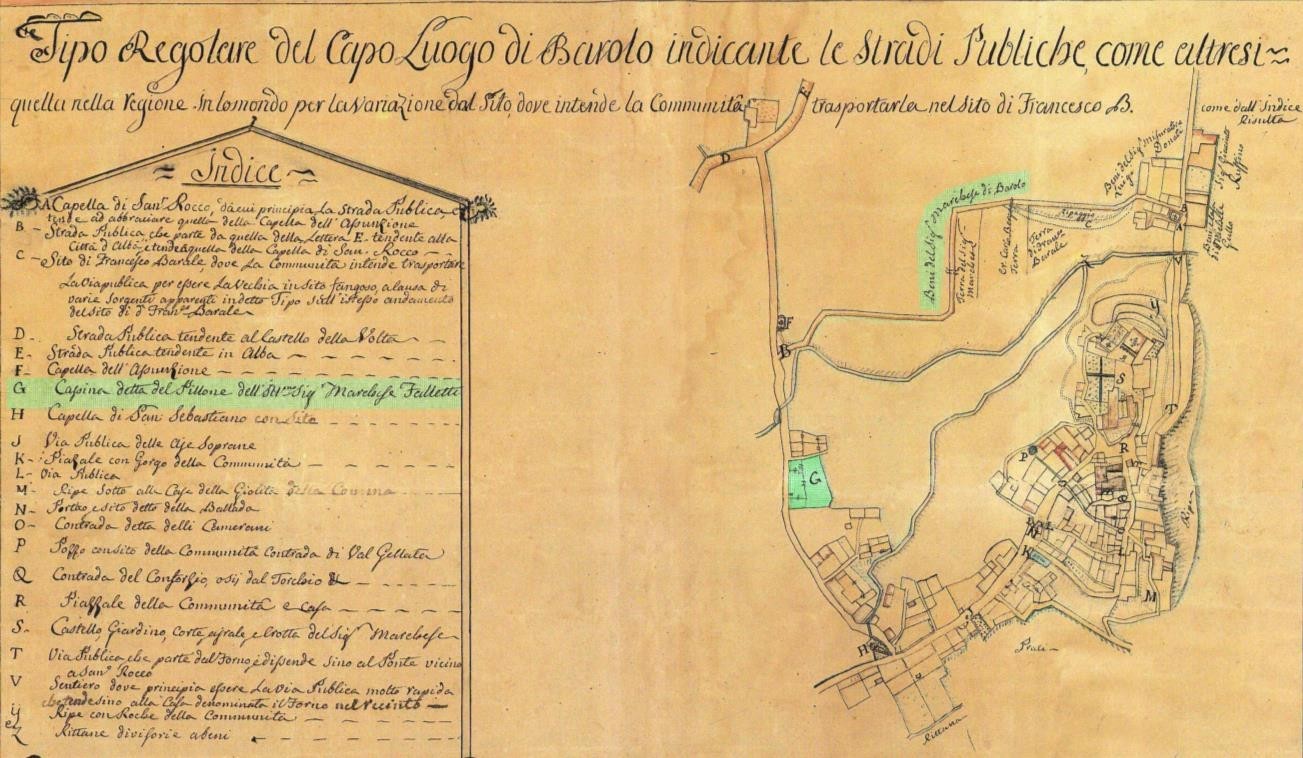
Map of the Municipality of Barolo, dated June 26, 1817


No products in the cart.

Barolo is a red wine, famous and appreciated worldwide, capable of captivating and seducing even the most refined and demanding palates with its flavor. We can trace the magic of this wine back to the imperial court of Versailles, where Juliette Colbert de Maulévrier*, great-granddaughter of the finance minister of Louis XIV—the Sun King—, met Carlo Tancredi Falletti**, Marquis of Barolo, a member of the Mounted Guard and Chamberlain to Napoleon.
Upon arriving in Barolo, driven by the critical and entrepreneurial spirit that would characterize her entire life, Giulietta immediately sensed that the vineyards surrounding the Castle and the small town enjoyed, due to their soil and microclimate, a particularly favorable position, capable of enhancing the unique characteristics of the grapes produced by an indigenous variety already highly valued at that time: The Nebbiolo.
Prestigious authors credit Giulia and Tancredi with the successful vinification of Nebbiolo. Thanks to their passion and meticulous care, Nebbiolo was ultimately transformed into a dry, austere wine with excellent aging potential, suitable for transport and appreciated in the aristocratic courts of Europe. Below are some excerpts from the extensive bibliography:
«"Barolo wine lasts for many years, and the Marquis of Barolo stores it to send to the Court of Turin and others. In this town, it is believed that to have a truly fine wine, one must make it from pure Nebbiolo… I visited the Marquis of Barolo's cellar: it is a large semi-basement with barrel vaults, above which is the vat room. There were 30 barrels, mostly containing aged wines…"»
– Giorgio Gallesio, the most distinguished botanist of those times, in «I Giornali dei Viaggi»
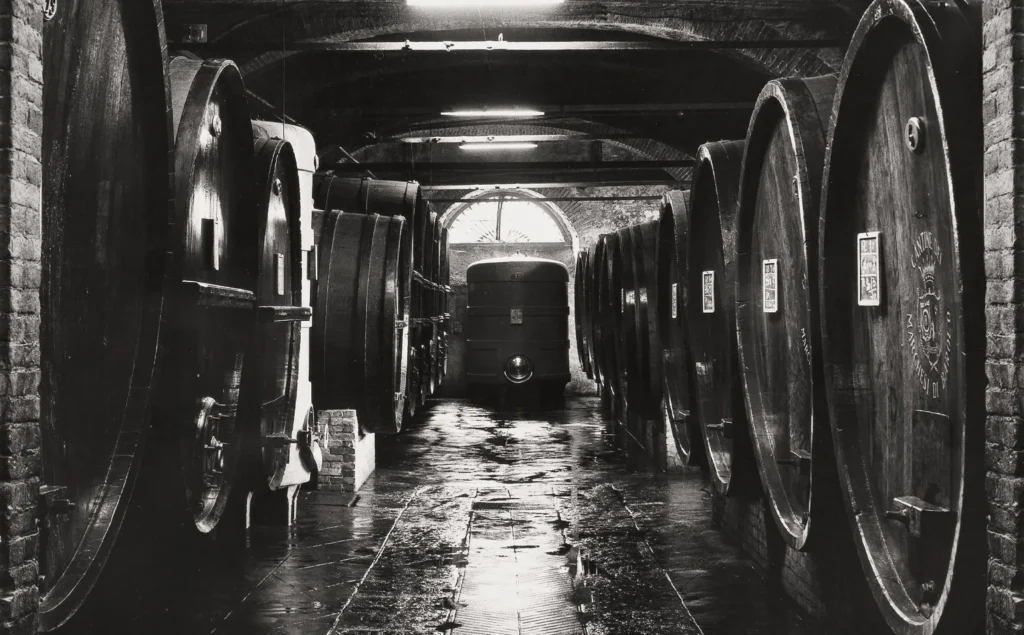

The cellars of the Marquises of Barolo, characterized by 11 barrel vaults where the old barrels of the Marchioness rest perfectly preserved to this day.
So, who made this Nebbiolo famous?
Everyone knows that these were the wines of the late Marquis of Barolo. It was simply called Barolo because that was the name of the municipality it came from…»
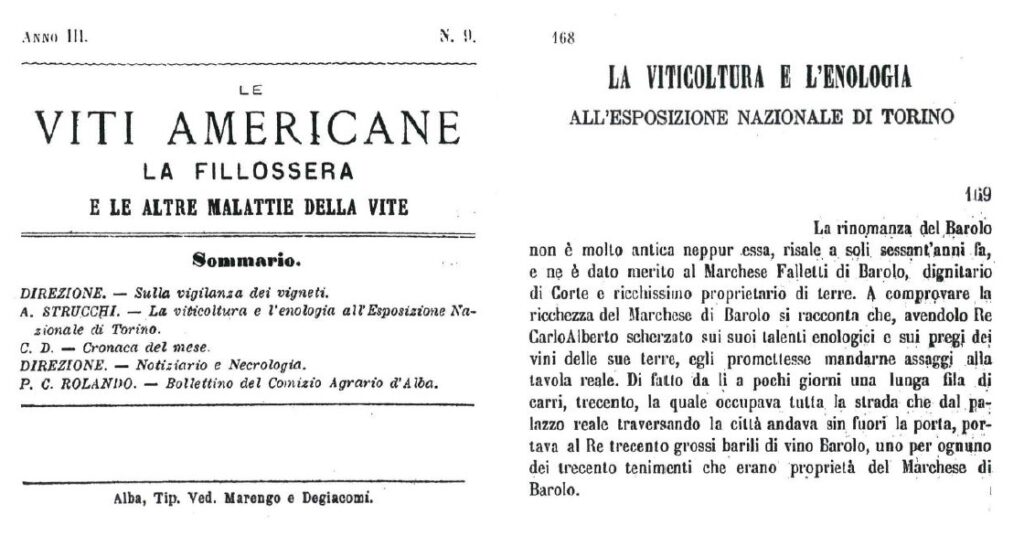
«"The greatest credit for the current fame of Barolo undoubtedly belongs to the Marquis Tancredi Falletti di Barolo, owner of the splendid vineyards of the town and those of Serralunga d'Alba, which later passed to the eponymous Opera Pía, richly endowed by his widow, Giulia Colbert di Maulévrier…"» Domi Gianoglio, journalist for Il Popolo Nuovo, in «Invito alle Langhe» (1965)
Carlo Tancredi Falletti di Barolo. The anonymity of a genius in Risorgimento Italy: The name Barolo is known throughout the world for the excellent wine "King of wines" and "wine of kings" that bears its label.
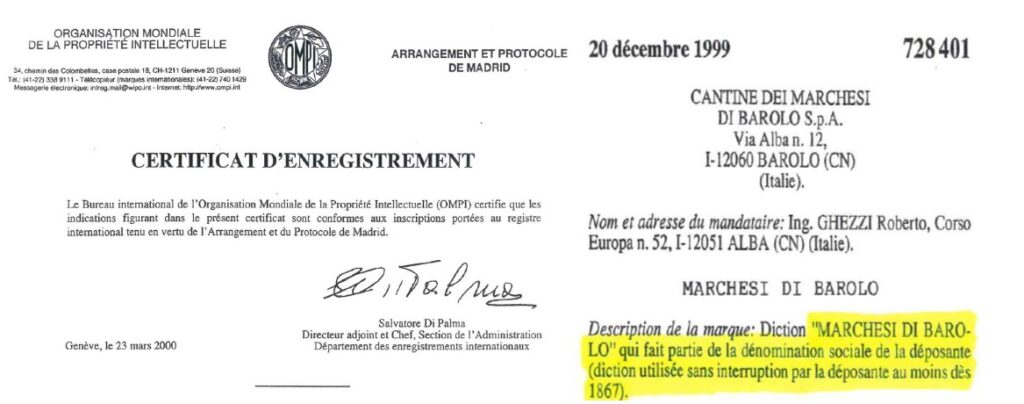
Indeed, tangible proof of this is World Intellectual Property Organization certificate —WIPO— according to which the name «Marchesi di Barolo» forms part of the company name of the depositary firm and has been used without interruption since at least 1867!
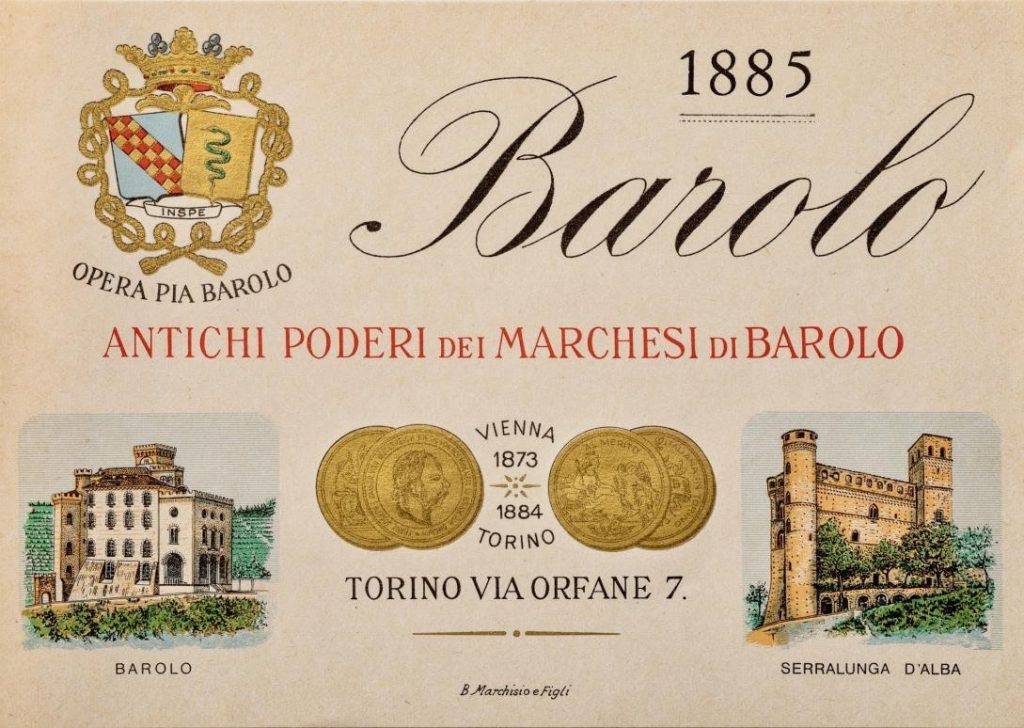
The Medal of Merit of the Vienna World's Fair from 1873, on the left, and the Gold Medal of the Italian General Exhibition of Turin of 1884, on the right.
In fact, in 1787 Thomas Jefferson, who would later become president of the United States, tasted nebbiolo while staying at the Hôtel d'Angleterre in Turin. In his travel journal, he described it with these words:
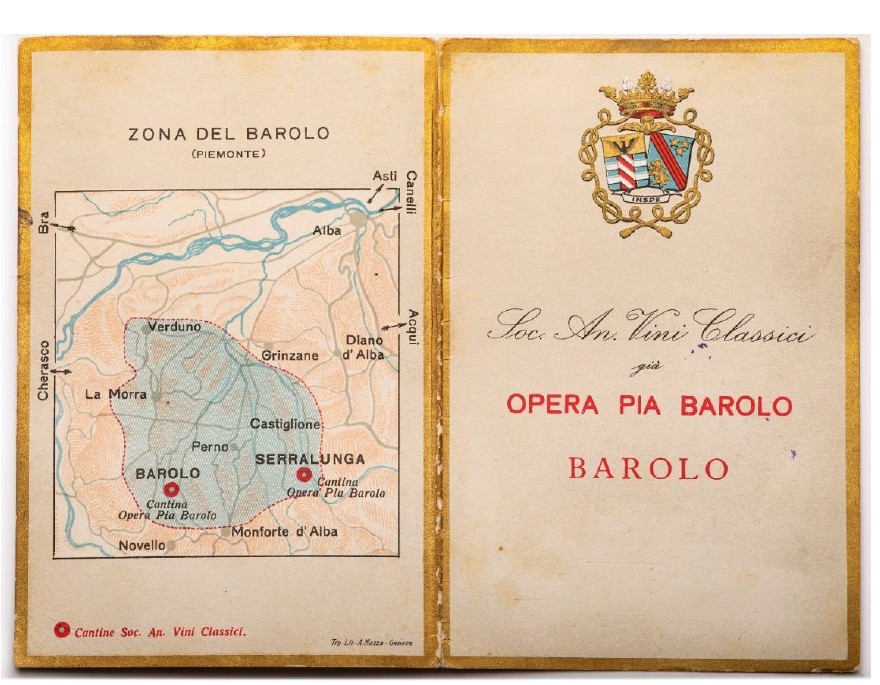
The Barolo Zone represented on the last cover page of the Opera Pia Barolo catalogue, still in the early years of the last century, did not include the territory of the Municipality of Grinzane Cavour.
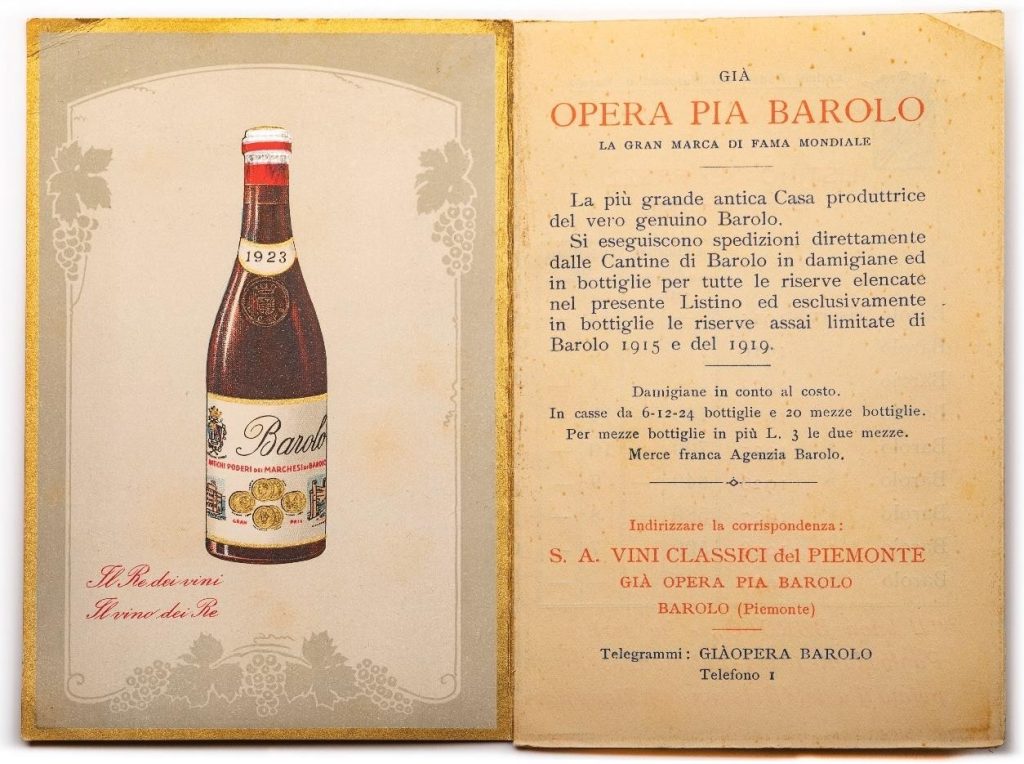
Opera Pia Barolo – «The largest and oldest producer of true and genuine Barolo» «The King of Wines, The Wine of Kings» – Slogan created and used by Opera Pia Barolo.
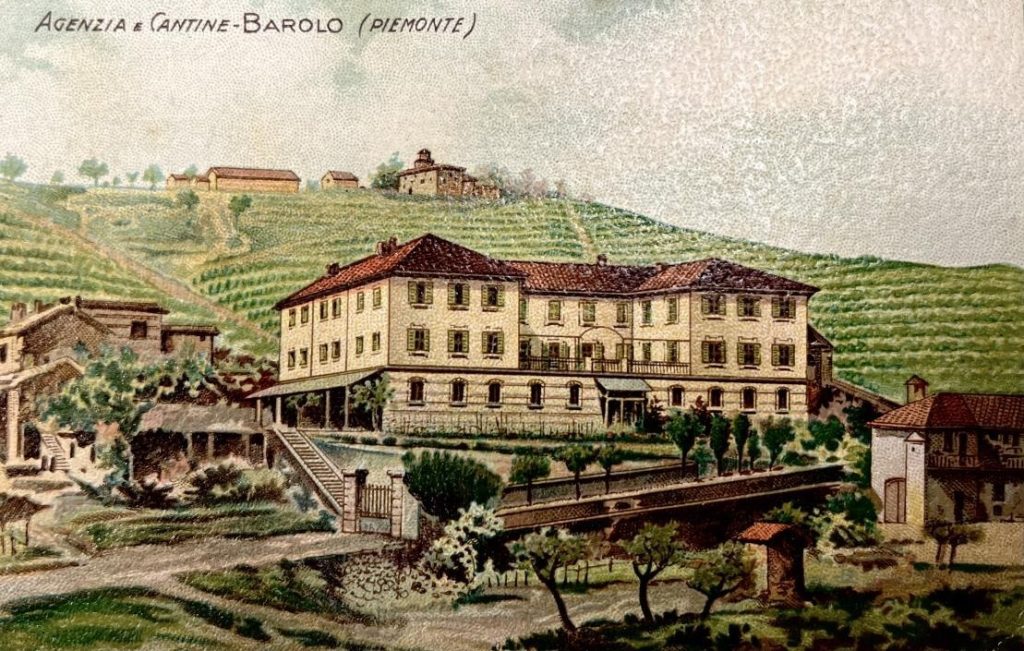
The Agency of the offices and the warehouses of the Marquesses of Barolo in a watercolor postcard from the 1920s 20th century.

The small medieval town of Barolo, with just 733 inhabitants, nestled between hills (recognized as a World Heritage Site by UNESCO) dotted with green vineyards and ancient uneven stone buildings, is home to one of the most prestigious DOCGs in Italy. The birthplace that gave it its name also owes it to the Falletti family, Marquises of Barolo, who began wine production in their vineyards more than 200 years ago. Marchesi di Barolo, the flagship winery, is located in the Marquis Falletti Castle itself, where its art, history and charm are cultivated.
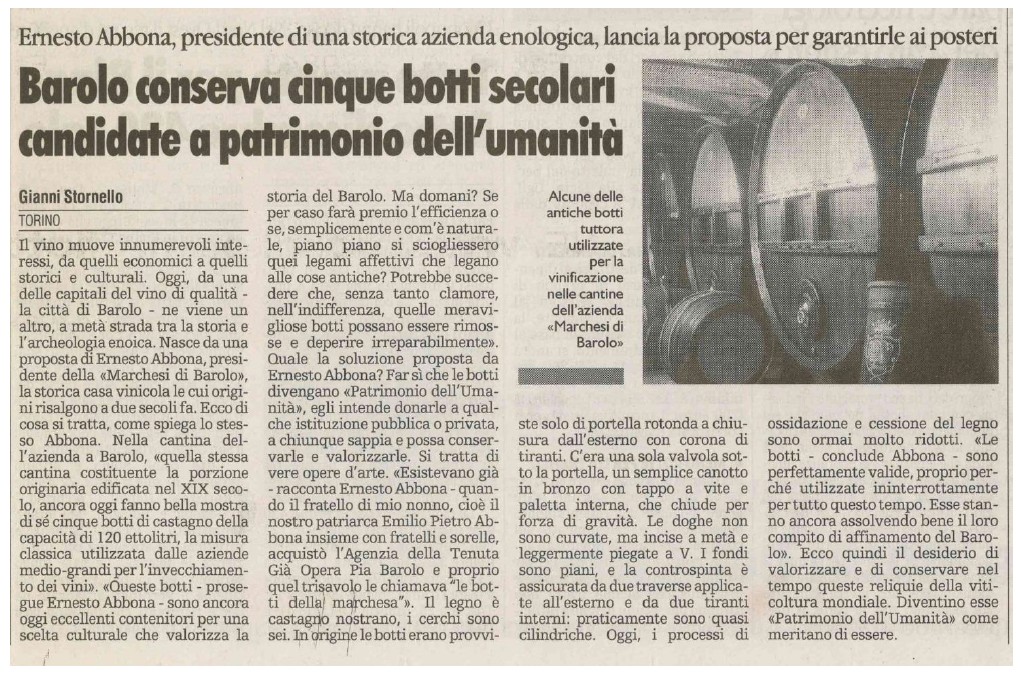
Five historic barrels from the period, the “Botti della Marchesa”, are still used today, after a meticulous restoration, for the maturation and refinement of outstanding wines.
The Marchesi had no children and, after the death of the couple, the Marchesi di Barolo dynasty was left without an heir. At the wish of Marchesa Giulia, a great philanthropist, the family's assets were donated to charity and a non-profit foundation was created in her name, "Opera Pia Barolo", to help those in need in nearby Turin.
The Winery was Recovered at the beginning of the 20th century by Pietro Abbona King Vittorio Emanuele III allows Pietro Abbona display the royal coat of arms on the sign of the Marchesi di Barolo wineries, as a supplier to the royal house. The aristocratic estate becomes a structured and efficient winery, bringing its wines to the tables of high society, the Popes, the Italian embassies around the world and the enormous and sumptuous ocean liners of the time.
Currently the Cantine dei Marchesi di Barolo is directed by Anna and Ernesto Abbona who, together with his children Valentina and Davide, are faithful interpreters of the diversity of the area and the native vines, rigorously respecting and preserving their typicality, thanks to the vinification of grapes from 120 hectares of their own vineyards and from winegrowers selected over many years of activity.
The mission of the family Abbona It is about knowing how to combine "tradition and evolution", proposing in a contemporary key, according to the enogastronomic trends of the most authentic and refined Made in Italy, high quality wines destined to enrich the history of a great winery, where an important heritage of vineyards, wineries and knowledge has been passed down for more than five generations.