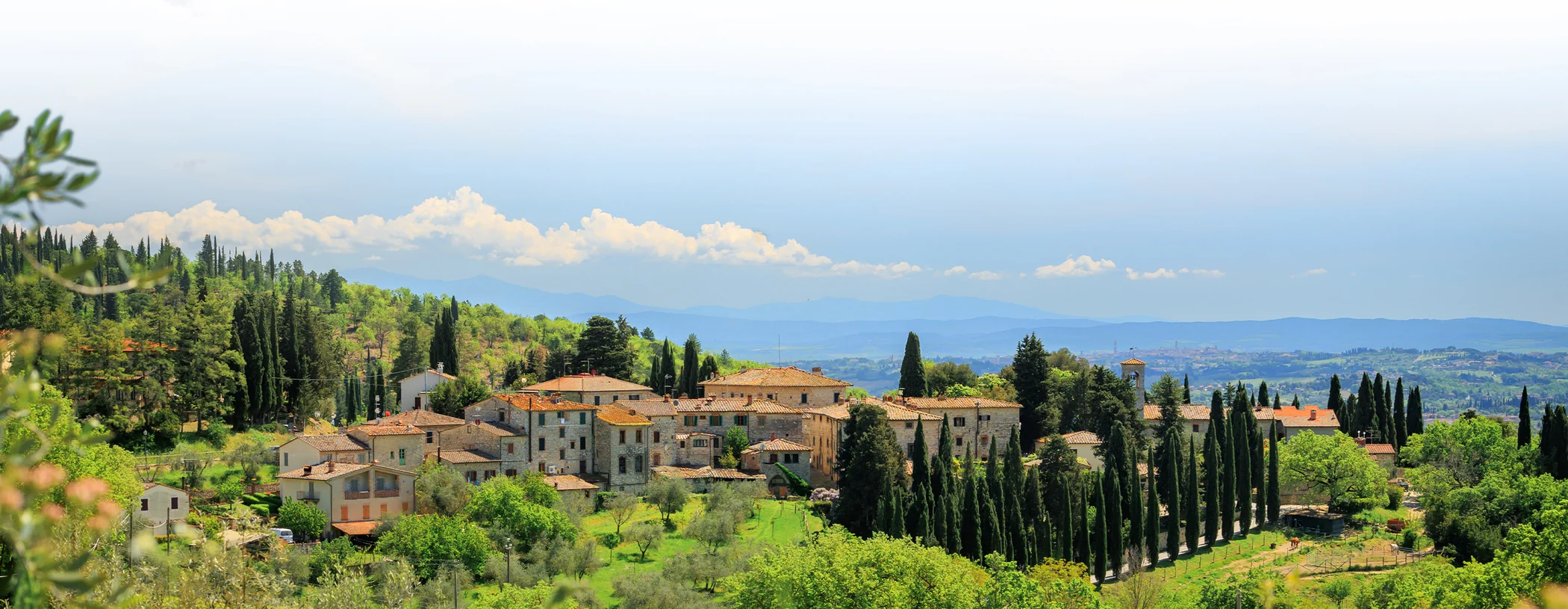
Castello di Fonterutoli is one of the oldest wineries in Tuscany, located in the heart of Chianti Classico, a few kilometers south of Castellina in Chianti. The Mazzei family has owned these lands since 1435, when the estate passed into their hands through inheritance from Madonna Smeralda, granddaughter of Ser Lapo Mazzei. Today, 24 generations later, the family continues to run the winery uninterrupted for almost 600 years.

The surname Mazzei is intertwined with the very origin of the name "Chianti." It was precisely in Fonterutoli where, in 1398, the agreements were signed that defined the historical territory of Chianti within the Florentine Republic, giving rise to the Black Rooster, the symbol that still identifies the Chianti Classico appellation today. Ser Lapo Mazzei himself, a 14th-century Florentine notary, is the author of the first known document that mentions "Chianti wine," dated December 1398.

Another prominent ancestor of the family is Filippo Mazzei (1730-1816), who emigrated to Virginia and formed a close friendship with Thomas Jefferson. His ideas on liberty and equality influenced the drafting of the United States Declaration of Independence.

There is also a local legend that adds color to the history of the place: it is said that the long war between Florence and Siena was resolved with a wager of a black rooster, and that the knights of both cities met precisely in Fonterutoli to seal the peace — the same place that had already been the scene of treaties between both cities in 1202 and 1208. Hence the Black Rooster (Gallo Nero) became the symbol that today distinguishes Chianti Classico.

Until World War II, wine was just one of the crops grown on the family's land, under the sharecropping system ("mezzadria") typical of Tuscany at the time. Only in recent generations has the winery dedicated itself entirely to wine and become the benchmark it is today.

Before the current owners, the winery was run by Lapo Mazzei, father of Francesco and Filippo. Today, they are at the helm: Filippo in charge of production and Francesco of marketing, along with Giovanni, Filippo's son, who represents the younger generation of the family in the business. Beyond Chianti Classico, the Mazzei family also owns two other wineries in Italy: Belguardo, in the Tuscan Maremma, and Zisola, in Noto, Sicily—both sharing the same philosophy of showcasing the native grape varieties of each terroir.

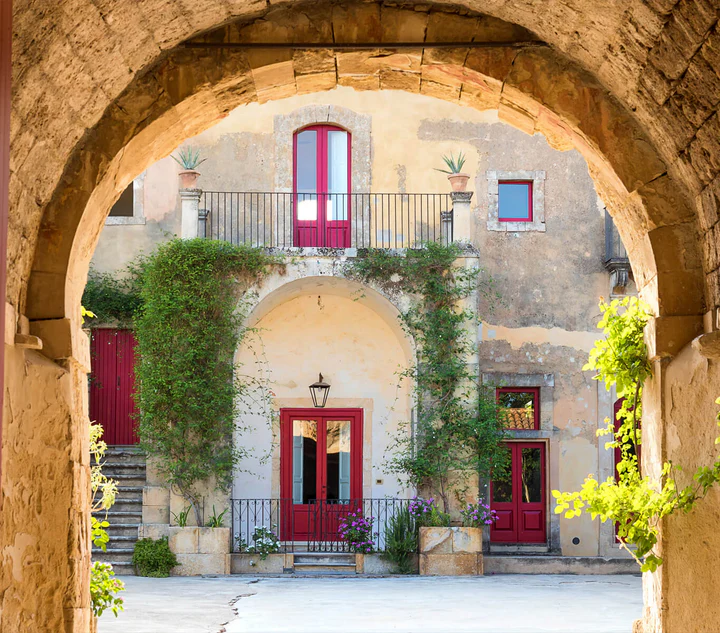
The village of Fonterutoli still retains its original Tuscan village appearance: a handful of houses, the church of San Miniato and the villa built at the end of the 16th century on the site where the fortified castle that gives the winery its name once stood.

Vineyards and terroir: the realm of diversity

The estate covers a total area of 650 hectares, 110 of which are dedicated to specialized vineyards, organized into seven zones or "terroirs" ranging from 220 to 570 meters above sea level, and further subdivided into 114 individual plots. The remainder of the property combines secondary crops and woodland, the natural habitat of various wildlife species. Each of the 114 plots is harvested by hand and vinified and aged in oak separately—a process of "zoning" (identifying and managing each micro-zone separately) that forms the basis of the winery's style and allows this diversity of soils to be translated into exceptional aromatic breadth and complexity.

The soil of Fonterutoli is formed from the disintegration of "alberese" limestone and sandstone, which gives the wines a complex, mineral character. The grape varieties cultivated for Chianti Classico are Sangiovese, Malvasia Nera, and Colorino, and for IGT wines, Sangiovese, Merlot, and Cabernet Sauvignon.

Since the 2017 vintage, the Mazzei family decided to go a step further and separately express the particularities of three of their most distinctive terroirs, giving rise to three different Chianti Classico Gran Selezione — each associated with one of the new Additional Geographical Units (UGA) that the appellation officially established from the 2020 vintage:

The estate covers a total area of 650 hectares, 110 of which are dedicated to specialized vineyards, organized into seven zones or "terroirs" ranging from 220 to 570 meters above sea level, and further subdivided into 114 individual plots. The remainder of the property combines secondary crops and woodland, the natural habitat of various wildlife species. Each of the 114 plots is harvested by hand and vinified and aged in oak separately—a process of "zoning" (identifying and managing each micro-zone separately) that forms the basis of the winery's style and allows this diversity of soils to be translated into exceptional aromatic breadth and complexity.

The soil of Fonterutoli is formed from the disintegration of "alberese" limestone and sandstone, which gives the wines a complex, mineral character. The grape varieties cultivated for Chianti Classico are Sangiovese, Malvasia Nera, and Colorino, and for IGT wines, Sangiovese, Merlot, and Cabernet Sauvignon.

Since the 2017 vintage, the Mazzei family decided to go a step further and separately express the particularities of three of their most distinctive terroirs, giving rise to three different Chianti Classico Gran Selezione — each associated with one of the new Additional Geographical Units (UGA) that the appellation officially established from the 2020 vintage:

The winery: architecture and gravity-fed winemaking

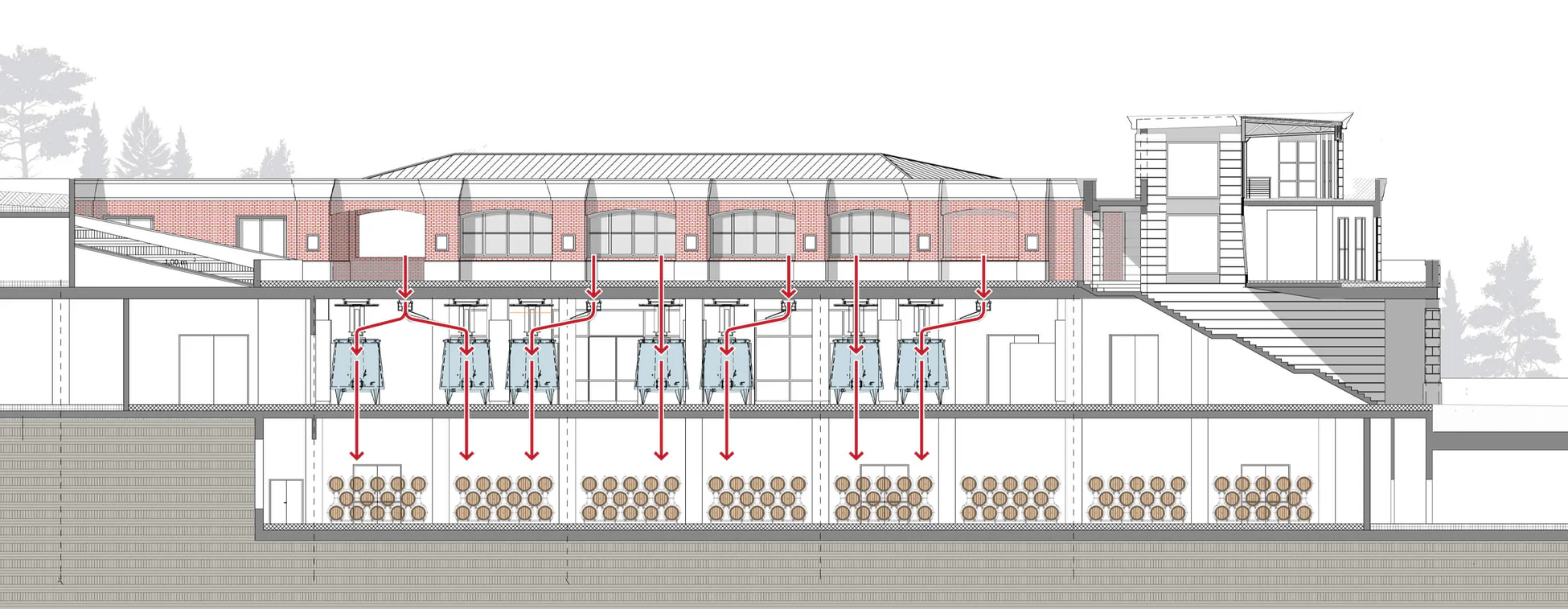
The Fonterutoli winery was designed by Agnese Mazzei, a family member and architect, who also designed the barrel cellar at Sassicaia. It is a modern, low-impact project that combines aesthetics and functionality, and is part of "Toscana Wine Architecture," a network of 14 signature wineries designed by leading figures in contemporary architecture.

The architectural design features three superimposed levels, so that the grapes harvested at the top naturally "fall" through the different stages of winemaking, taking advantage of gravity without the need for pumping. This is achieved with 74 conical-cylindrical stainless steel tanks, each with a capacity of 100 hectoliters, allowing each plot to be vinified separately and thus preserving the estate's biodiversity. The result is multiple small-scale batches of wine which, combined with careful foot treading and long macerations, produce wines with exceptional color and particularly smooth and elegant tannins.

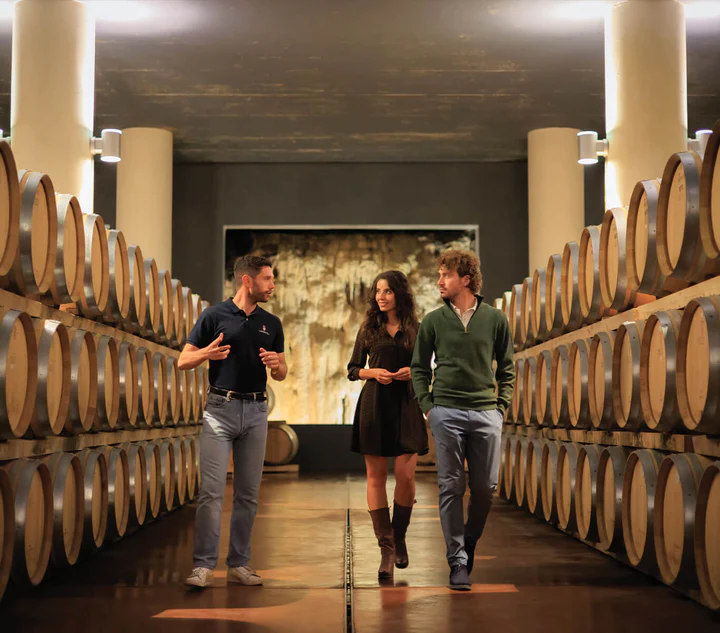
Fifteen meters below ground lies the barrel room, where more than 3,000 oak barrels age. Temperature and humidity are regulated entirely naturally by five springs that flow between the living rock walls.

The Mazzei family was also one of the great promoters of the Gran Selezione movement, the highest category within the Chianti Classico quality pyramid.

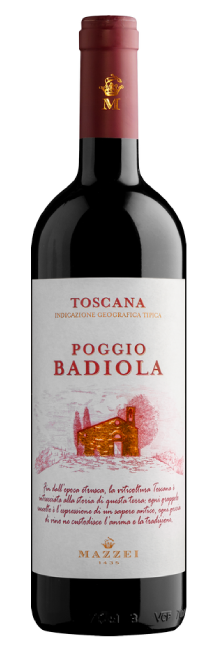
Poggio Badiola 2022 — Tuscany IGT

A Super Tuscano for everyday enjoyment. It comes from vineyards located at high altitude in the heart of the Chianti Classico region, around a 10th-century Romanesque church. It uniquely combines the freshness and elegance of Sangiovese with the smooth structure of Merlot.

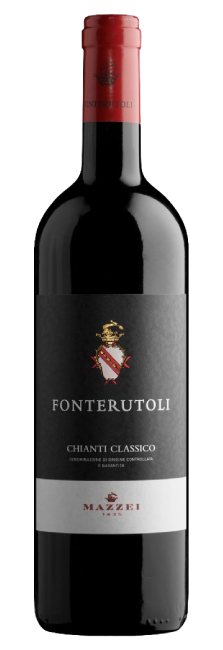
Fonterutoli 2023 — Chianti Classico DOCG

Chianti Classico comes from the independent vinification of grapes from the company's various plots, located in a unique variety of soils and climates, at an altitude of between 220 and 570 meters above sea level, in the heart of the Chianti Classico region. It is the company's flagship and best-selling wine, a benchmark in its category.

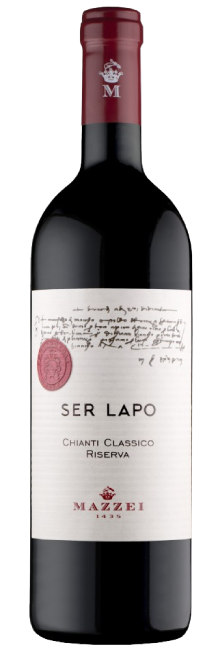
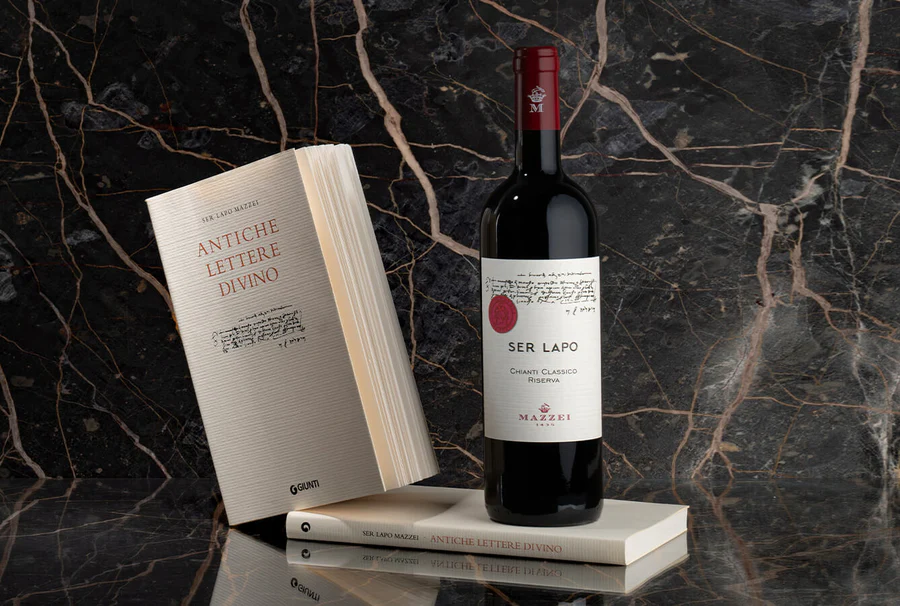
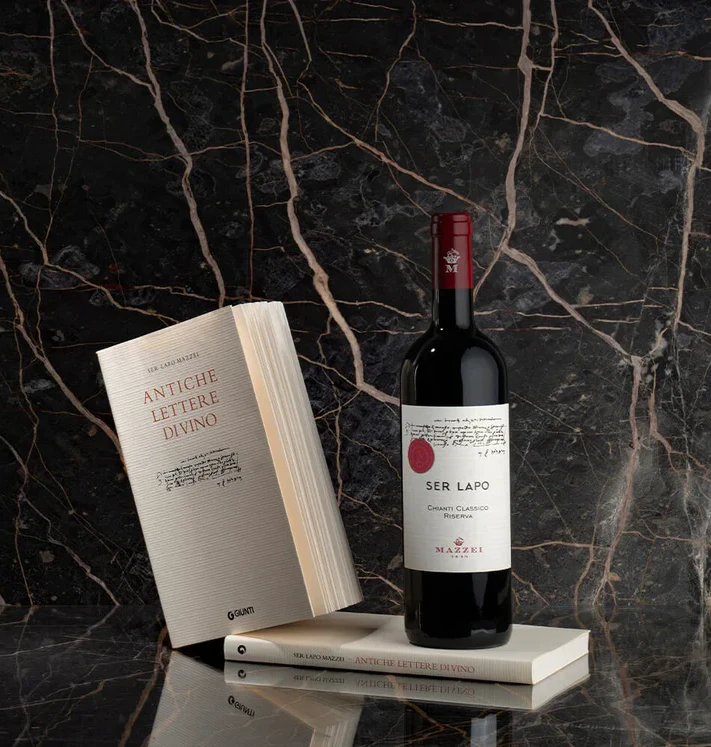
Ser Lapo 2023 — Chianti Classico Riserva DOCG

The historic Chianti Classico With this exceptional Chianti Classico Riserva, Marquis Mazzei pays homage to his illustrious ancestor Ser Lapo, author of the first official document that mentions "Chianti wine" (December 16, 1398).

The father of Chianti Classico The first documented reference to Chianti as a producing region is found in a correspondence dated December 16, 1398 between Ser Lapo Mazzei, "the diligent notary", and Francesco Datini, "the merchant of Prato".


«"Payable on December 16 (1398), 3 florins, 26 pence and 8 dinars to Piero di Tino Riccio, for 6 barrels of Chianti wine… said product paid by means of a letter of credit from Ser Lapo Mazzei." In their conversations, these two singular characters spoke of the business of the time, the pleasures of life and, of course, wine, of which Ser Lapo was a great enthusiast and connoisseur.

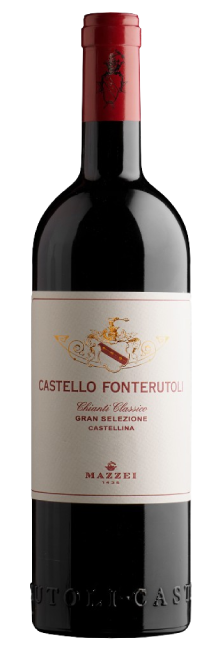
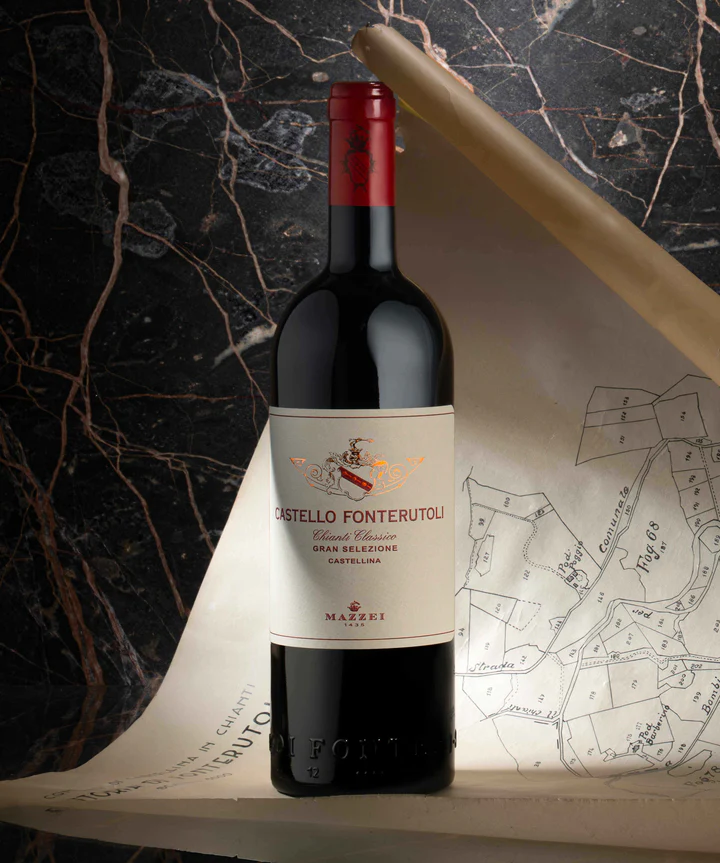
Castello Fonterutoli 2022 — Chianti Classico Gran Selezione DOCG

Gran Selezione since 1995. This wine embodies the very essence of the Castello di Fonterutoli estate. It was the pioneer of the Gran Selezione category in 1995; it is a Cru Sangiovese from the finest plots surrounding the village of Fonterutoli, in the municipality of Castellina in Chianti. The true "Château" of the estate.

Castello Fonterutoli – Castellina in Chianti comes from a selection of 11 of the best vineyard plots surrounding the village of Fonterutoli.

Born in 1995, anticipating the Gran Selezione, this wine, starting with the 2017 vintage, is crafted from a selection of 11 of the finest vineyard plots surrounding the village of Fonterutoli. In Castellina in Chianti, the microclimate is the result of a perfect balance between a mid-to-high hillside position and a vineyard oriented to capture the heat rising from the Val d'Elsa valley. A healthy daily temperature range is ensured by the forests that extend over the vines, bringing cool breezes at night. This ideal microclimate, combined with the characteristics of the alberi-rich soil, offers a perfect fusion of elegance, structure, and minerality.

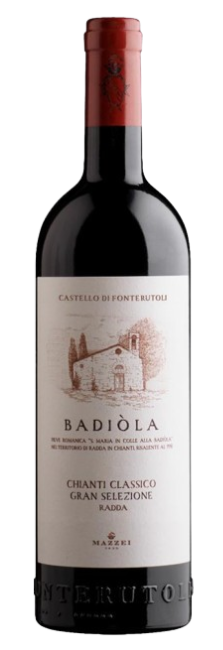
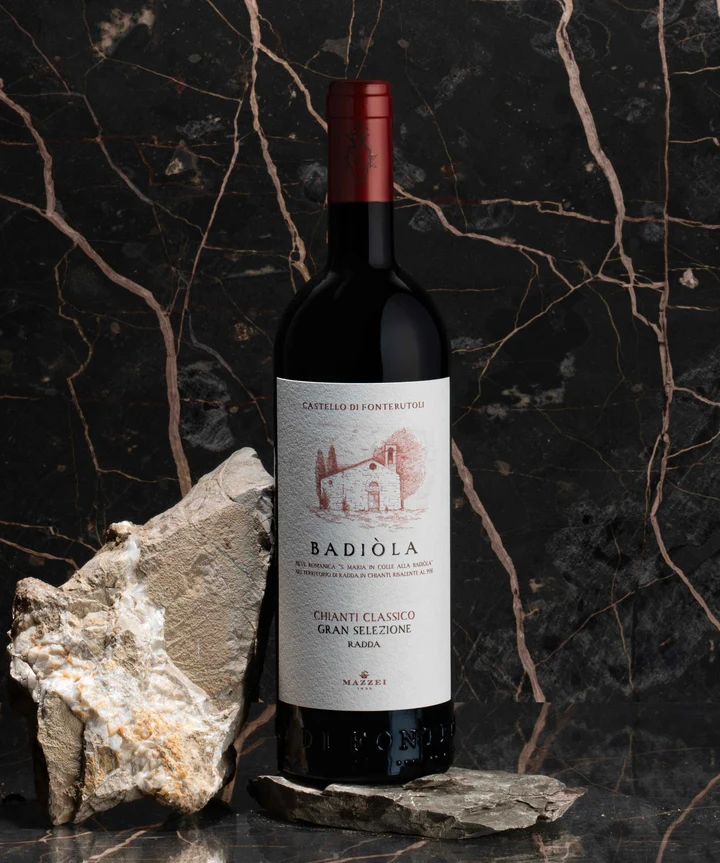
Badiola 2022 — Chianti Classico Gran Selezione DOCG

High-altitude Gran Selezione: This Chianti Classico Gran Selezione comes from the vineyards surrounding the small Romanesque parish of Badiòla, in the municipality of Radda in Chianti. These vineyards are among the highest in Chianti Classico and benefit from a particularly cool climate.

Castello Fonterutoli

Radda in Chianti
This wine, born at 570 meters above sea level, displays innate elegance and freshness, with subtle notes of red fruit and berries. It comes from vineyards located among the highest in Chianti Classico, with soils composed of galestro and sandstone. The municipality of Radda in Chianti, where the vineyards are situated, enjoys a cool climate even in the height of summer, with the lowest average daily temperatures on the entire estate. As a result, budbreak and ripening are often delayed, with the harvest generally taking place in mid-October.

A wine born from the highest vineyards of the estate, at the foot of the 12th-century church of La Badiola.

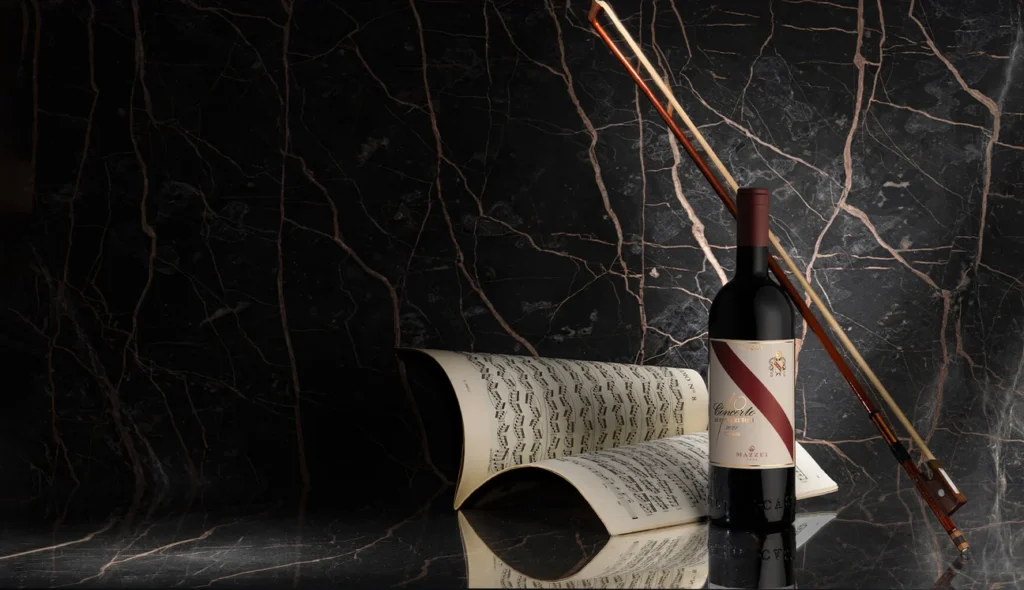
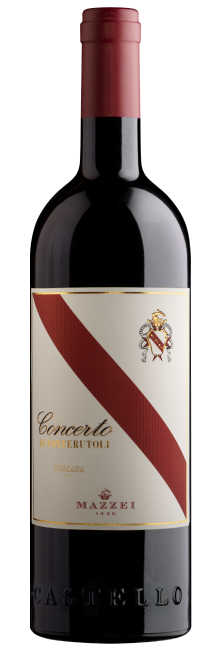
Concerto Fonterutoli 2022 — Toscana IGT

The legend continues since 1981. “Concerto” was born in 1981, the fruit of a viticulture with a potential yet to be exploited, which experimented with new cultivation systems and new mixtures, including non-native varieties; it was one of the forerunners and one of the ten protagonists of the “Super Tuscans” phenomenon.

Scassi and Brotine Vineyards

The determination of some Tuscan winemakers to explore new paths without betraying their close ties to the region and its history made it almost inevitable that Supertuscans would successfully overcome this challenge. Concerto, a blend of Sangiovese and Cabernet Sauvignon, is a perfect example of this. Its unique character lies in the fact that its Cabernet Sauvignon is not simply the "standard" variety; the deep bond it has forged with its adopted terroir, Fonterutoli in the Chianti Classico region, has allowed it to develop its own elevated and inimitable character.

The Sangiovese comes from one of the finest vineyards in the lower part of the Fonterutoli terroir, called "Scassi," located at approximately 350 meters above sea level. This vineyard benefits from perfect sun exposure and rocky soil with a good presence of limestone and a very rich base. A large selection of Sangiovese vines from an experimental vineyard cultivated in the 1930s was planted here, resulting in a unique character. The Cabernet Sauvignon comes from a small vineyard called "Brotine," situated at 340 meters above sea level and surrounded by an oak forest. This particular vineyard was chosen for its unique microclimate and calcareous rock soil, considered especially suitable for maximizing the potential of this variety.

One of the first Super Tuscans ever produced, Concerto di Fonterutoli, first released in 1981, is one of the first ten wines that gave rise to the Super Tuscan legend in a decade that marked a historic turning point in Tuscan viticulture. Thanks to the valuable contribution of this select group of wines, all but one coming exclusively from the Chianti region, the term "Super Tuscan" quickly established itself as a category in its own right, suddenly competing with regions of undisputed prestige like Bordeaux, and adding a new luster to the image of Italian wine in general.

The taste of a legend
The first vintage of Concerto was a bold experiment that resulted in just fifteen barrels—the first ever used at Fonterutoli—carefully preserved in our historic cellars for eighteen months. At the first tasting, after all that time, the combination of the two varieties demonstrated such perfect balance that it immediately evoked a symphony. In fact, the Marchesa Carla Mazzei didn't hesitate to name the wine Concerto, a name that perfectly captures the harmony achieved between the two varieties and the impeccable symphony of complex flavor notes that characterize it.

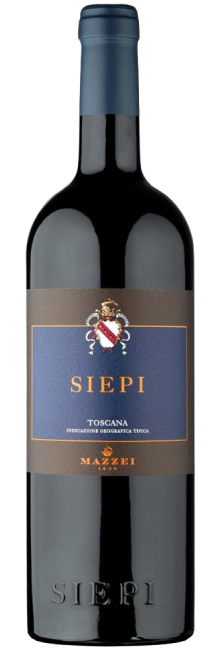
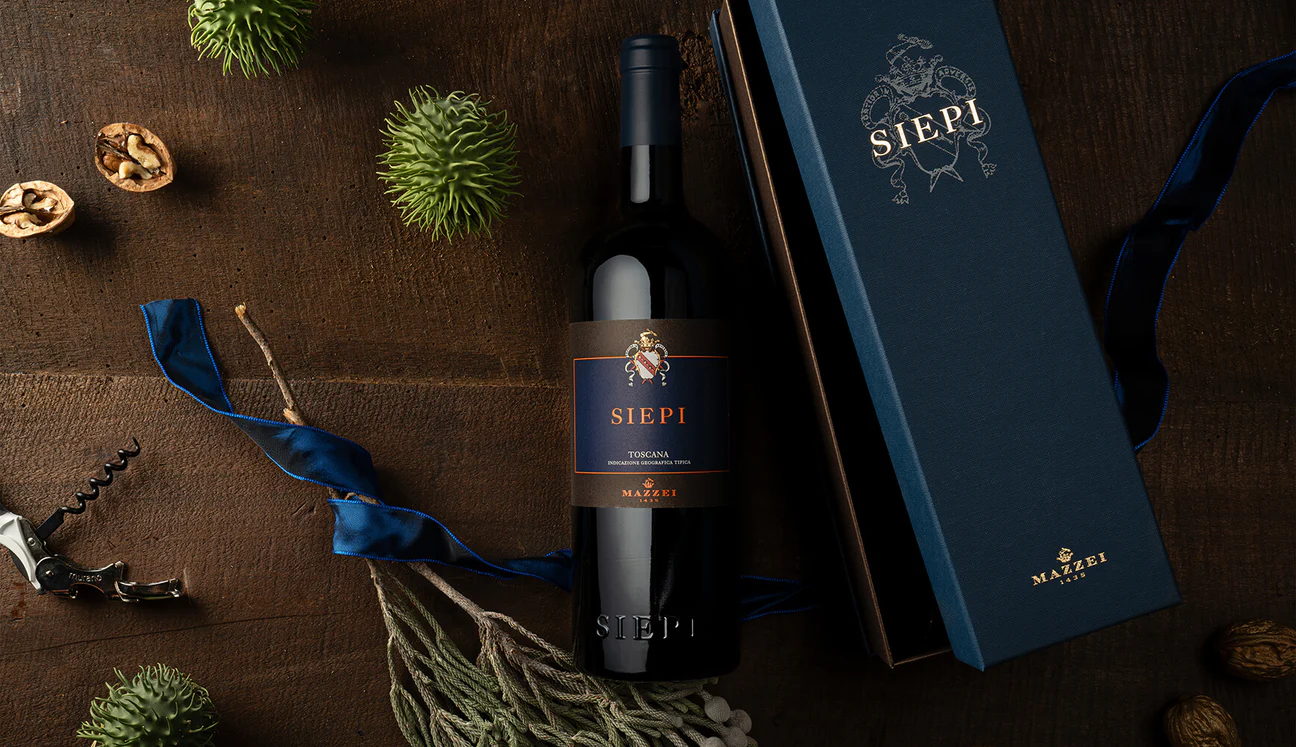
Siepi 2023 — Toscana IGT

«"One of the 50 wines that changed the Italian winemaking style» (Gambero Rosso)
Siepi, owned by the Mazzei family since 1435, has always been a model winery, still managed with the same respect today. Its privileged location, a special microclimate, and the forward-thinking approach taken in the early 1980s to plant Merlot as the ideal grape to complement Sangiovese in this very particular terroir, result in a wine perfectly balanced in elegance, power, and complexity.

Siepi Located in Castellina in Chianti, Siepi has always been a model estate, managed with an innovative vision, non-invasive farming practices, and constant care to preserve the delicate hydrogeological balance of the area. Today, Siepi continues to be managed with the same respect inherited from the past, ensuring that it will be passed on intact to future generations.

The combination of these two varieties produces a perfectly balanced wine. The Sangiovese plot faces south, with a slope of 12%, and is located at an average altitude of 240 meters above sea level. The Sangiovese biotypes in this plot have been carefully selected to contribute concentration and complexity to the wine, along with good acidity that promotes long aging. The Merlot plot faces southwest, with a slope of 5%, and is located at an average altitude of 250 meters above sea level. The Merlot enhances the essence of the Sangiovese, complementing its understated elegance with its opulence, smoothness, and color.

History of Siepi
Siepi's history dates back almost six hundred years, when the Mazzei family inherited the lands of Siepi and Fonterutoli in 1435. A document in the Fonterutoli family archives lists Siepi among the possessions of Madonna Smeralda Mazzei, describing it as "a plot of land adjacent to the house, with olive trees, vines, and oak trees…," making it undoubtedly one of the oldest recorded vineyards in Italy. Over the centuries, Siepi became renowned for the quality of its Sangiovese, to the point that numerous winegrowers from all over Tuscany would come to the vineyards to request cuttings to take home and graft onto their own vines. Siepi has always produced wines of superior structure and sophisticated elegance. The arduous work of massal selection, which allows Castello di Fonterutoli to boast an unparalleled winemaking heritage today, began in the Siepi vineyard.